Salads
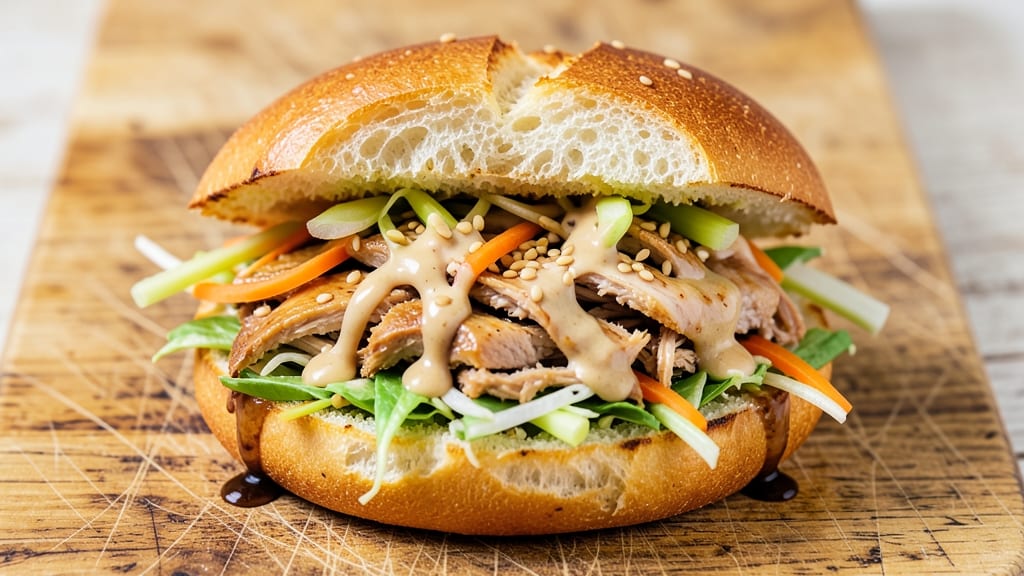
This Asian chicken salad sandwich recipe transforms a simple lunch into a flavor-packed masterpiece with tender chicken, crisp celery, and a peanut dressing that ties everything together. The secret lies in balancing sweet, savory, and nutty flavors while keeping the sandwich structure crisp and satisfying—no soggy bread here.
After years of perfecting the ratio of peanut butter to soy sauce, I’ve landed on a dressing that’s creamy yet tangy, with just enough heat to keep things interesting.
What sets this recipe apart is the textural contrast—crunchy shredded cabbage and carrots cut through the tender chicken, while toasted sesame seeds add a final crunch. The sandwich comes together in minutes, but the flavors develop even more after a quick chill in the fridge.
This isn’t just another salad sandwich; it’s a fusion of Asian-inspired boldness with the familiar comfort of a handheld meal.
The result is a sandwich that’s equally at home on a busy workday or a weekend brunch spread. Each bite delivers a perfect harmony of creamy peanut dressing, fresh vegetables, and juicy chicken, all held together by a sturdy roll.
Whether you’re feeding a crowd or just craving something fresh and satisfying, this recipe delivers restaurant-quality flavor without the fuss.
Pro tip: For extra crunch, toast the sesame seeds in a dry pan before sprinkling them on top. The nutty aroma alone will make your sandwich taste even more elevated. Let’s build this sandwich step by step—your taste buds will thank you.
Ingredients for asian chicken salad sandwich
Peanut butter, crisp veggies, and toasted sesame rolls—this sandwich packs restaurant-style flavor in every bite.
| Ingredient | Amount | Notes |
|---|---|---|
| Boneless Chicken Breast 🍗 | 1 ½ lb | Poached or grilled, sliced thin |
| Shredded Green Cabbage 🥬 | 2 cups | Thinly sliced for crunch |
| Carrots 🥕 | 1 medium | julienned or shredded thin |
| Celery Sticks 🧅 | 2 cups | Thinly sliced for texture |
| Creamy Peanut Butter 🥜 | ½ cup | Natural, no added sugar |
| Soy Sauce 🍶 | ¼ cup | Low-sodium preferred |
| Sesame Oil 🫒 | 1 tbsp | Toasted for aroma |
| Lime Juice 🍋 | 2 tbsp | Freshly squeezed |
| Honey 🍯 | 1 tbsp | Substitute maple syrup if vegan |
| Sesame Seeds 🌾 | 2 tbsp | Toasted for crunch |
| Mayonnaise 🥫 | ¼ cup | For extra creaminess |
| Sesame Rolls 🍞 | 4 whole | Toasted for structure |
| Salt 🧂 | ½ tsp | Kosher or sea salt |
| Black Pepper 🌶️ | ¼ tsp | Freshly ground |
The peanut butter is non-negotiable here—natural, no-sugar-added is the way to go. Trader Joe's or Smucker's Natural are my go-tos, but any creamy peanut butter works. The sesame rolls? Kroger or Asian markets usually carry them fresh, but if you can't find them, toasted brioche rolls are a solid backup. For the chicken, I like to poach it in broth with a splash of soy sauce—keeps it juicy and adds flavor. If you're grilling, hit it with the soy sauce after cooking to avoid drying it out.
No sesame seeds? Toasted sunflower seeds work in a pinch, though they lack that nutty aroma. Running low on lime juice? Fresh lemon juice at half the amount gets you close. The honey can be swapped for maple syrup if you're avoiding sugar, but trust me—the peanut-butter-to-honey ratio is key. For the cabbage and carrots, pre-shredded bags save time, but fresh julienned veggies taste like a million bucks. The celery? No substitute here—it’s the backbone of that classic crunch.
Peanut dressing keeps for 5 days in the fridge, but it’s best fresh. Store it in a sealed jar with a thin layer of oil on top to prevent a skin from forming. The rolls stay fresh for 3 days if wrapped tightly in plastic. Pro tip: Assemble the sandwiches just before eating—the dressing can make the bread soggy if prepped too early. For extra crunch, toast the sesame seeds in a dry pan for 2 minutes until golden.
Why You'll Love This Recipe
- No-Fuss Prep: I swear by this recipe because it’s the kind of meal that lets me skip chopping for hours. Shred the cabbage once—that’s it—while the chicken cooks, and the carrots and celery just need a quick rough chop. Honestly, my counter stays cleaner than my last attempt at homemade sushi.
- Peanut Butter Magic: That creamy peanut butter isn’t just a binder—it’s the star. One spoonful transforms the salad into something rich and nutty, cutting through the crunch of cabbage and carrots like a flavor bomb. (Yes, even my peanut-hating husband asks for seconds.)
- Lunchbox Hero: Between us, this is my go-to for packed lunches or last-minute gatherings. The sandwich holds up perfectly—no soggy bread here—and the peanut dressing keeps everything fresh. I’ve fed book club meetings, soccer moms, and my own picky toddler with this. It’s that reliable.
- Budget Meal Maker: Chicken breast and cabbage stretch for days, and I’m not joking. A single batch feeds my family for three lunches, and the leftovers? They taste just as good cold the next day. Plus, creamy peanut butter is cheaper than most dressings, so I’m basically winning at grocery math.
Step-by-step instructions for Asian chicken salad sandwiches
Here's how to assemble these flavor-packed sandwiches with perfect texture and balance.
Cook and Slice the Chicken Breast
Start by cooking the 1.5 lb boneless chicken breast until fully done. I prefer poaching it in a pot of water with 1 tbsp sesame oil, 0.5 tsp salt, and 0.25 tsp black pepper for 12-15 minutes until the internal temperature reaches 165°F. The oil infuses subtle nutty notes while keeping the meat moist.
Once cooked, let it rest for 5 minutes before slicing thinly against the grain. This creates tender, bite-sized pieces that won't overwhelm the salad. If you prefer grilling, cook the chicken over medium heat for 6-7 minutes per side until golden and juicy.
Prepare the Crunchy Vegetable Mix
In a large mixing bowl, combine the 2 cups shredded green cabbage, 2 cups celery sticks, and 1 medium carrot (julienned or shredded thin). The cabbage should be crisp and fresh—if it's wilting, store it in cold water for 5 minutes before draining. Toss the vegetables with 1 tbsp lime juice to brighten their flavor and prevent browning.
Here's the thing—don't skip the celery. Its crisp texture contrasts beautifully with the creamy peanut dressing and tender chicken. If your celery is particularly fibrous, slice it extra thin or pulse it quickly in a food processor for uniform texture.
Make the Creamy Peanut Dressing
In a separate bowl, whisk together the 0.5 cup creamy peanut butter, 0.25 cup soy sauce, 0.25 cup mayonnaise, 1 tbsp honey, and 1 tbsp sesame oil. Start with a slow whisk to combine, then increase speed to medium for 30 seconds until smooth. The dressing should be thick but pourable—if it's too stiff, add 1-2 teaspoons of water at a time until it reaches a creamy consistency.
Taste and adjust seasoning. I usually add a pinch more salt if the peanut butter is unsalted, and a splash more lime juice if the flavors need brightness. The dressing should coat the back of a spoon but not be gloppy—this ensures perfect balance in every bite.
Assemble the Salad Filling
Add the sliced chicken to the vegetable mix and gently toss with the peanut dressing. You'll want to coat everything evenly, but don't overmix—just enough to combine. Sprinkle with 2 tbsp sesame seeds and toss lightly. These seeds add a toasty crunch that ties everything together.
Let the salad sit for 5 minutes before serving. This allows the flavors to meld slightly and the dressing to absorb into the chicken and vegetables. If you're assembling ahead of time, keep the salad and dressing separate until just before serving to maintain maximum crunch.
Toast and Assemble the Sandwiches
Toast the 4 whole sesame rolls lightly in a dry skillet over medium heat for 1-2 minutes per side until golden and crisp. This adds structure and prevents sogginess. Alternatively, you can brush them with a little sesame oil before toasting for extra flavor.
Spread about 1 tablespoon of the peanut dressing on each roll, then divide the chicken salad evenly among them. Press gently to compress, but don't squish—you want those crunchy vegetables to stay intact. Cut each sandwich diagonally and serve immediately while everything is fresh and crisp.
Pro Tips For Making Asian Chicken Salad Sandwich
- Cook Chicken Low: Poach or bake boneless chicken at 325°F (165°C) instead of boiling—it stays juicier and shreds cleaner. I used to overcook it on high heat, and the result was dry, rubbery strips that fell apart in the salad. Take it out at 165°F internal temp, then let it rest 5 minutes before shredding.
- Shred Cabbage Tight: Use a mandoline or sharp knife for thin, even shreds—thick strips make the salad look sloppy. I learned this the hard way when my uneven shreds turned the sandwich into a soggy mess. Aim for matchstick-thin slices so they hold up in the dressing.
- Soak Celery First: Toss celery sticks in ice water for 10 minutes before adding to the salad—it softens just enough to blend without turning mushy. I skipped this once and ended up with crunchy, stubborn stalks that ruined the texture. Drain well before mixing.
- Whisk Peanut Butter Fast: Thin creamy peanut butter with hot water (1:1 ratio) instead of cold milk—it emulsifies instantly and won’t separate. I wasted three batches trying to mix it with cold liquid, and it always curdled. Stir in while warm for a silky dressing.
Flavor customization for this asian chicken salad sandwich
Spicy Peanut Twist
Add 1-2 teaspoons of sriracha or ½ teaspoon of gochujang to the peanut dressing for a kick. I like to balance the heat with an extra ½ teaspoon of honey to keep it sweet-spicy.
For extra depth, stir in ½ teaspoon of grated ginger and 1 minced garlic clove while making the dressing. This version works especially well with jalapeño slices on top of the sandwich. 🌶️
Sweet and Tangy
Swap the honey for 1 tablespoon of hoisin sauce and add 1 teaspoon of rice vinegar to the dressing. This creates a sweet-tangy profile that pairs beautifully with the creamy peanut base.
Garnish with thinly sliced red onions and chopped cilantro for freshness. The hoisin adds umami depth that elevates the entire sandwich.
Sesame-Ginger Crunch
For a more aromatic variation, infuse the dressing with 1 teaspoon of toasted sesame seeds and ½ teaspoon of freshly grated ginger. Add ½ teaspoon of grated lemon zest for brightness.
Toast the sesame seeds in a dry pan until golden before mixing them into the dressing. This version has a warm, nutty aroma that makes every bite feel special. 💫
Lighter Citrus Dressing
Reduce the peanut butter to ¼ cup and add 2 tablespoons of Greek yogurt to lighten the dressing. Increase the lime juice to 3 tablespoons and add 1 tablespoon of rice vinegar.
This version is tangier and less heavy, perfect for warm days. Pair it with mandarin orange segments mixed into the salad for a refreshing twist.
Extra Crunchy Add-Ins
Boost the texture by adding ¼ cup of crushed peanuts or toasted cashews to the salad mix. For a smoky touch, sprinkle with ½ teaspoon of smoked paprika and 1 tablespoon of chopped scallions.
These additions create a satisfying contrast with the creamy dressing and tender chicken. Store-bought pre-crushed peanuts work fine, but toasting them briefly in a dry pan adds even more flavor.
Vegan Adaptation
Replace the chicken with 1.5 lbs of extra-firm tofu, pressed and baked with 1 tablespoon soy sauce and 1 teaspoon maple syrup until crispy. Use maple syrup instead of honey in the dressing and ensure your peanut butter is vegan.
The tofu absorbs the peanut dressing beautifully, creating a hearty, plant-based version that still delivers on flavor and texture. 🌱
Nutrition facts
Frequently asked questions
Can I use leftover rotisserie chicken instead of fresh?
Leftover rotisserie chicken works perfectly—just shred it thinly and toss it with the dressing. The key is to use chicken that's been cooked for at least 4-5 hours (like overnight) so it's fully tender. Avoid overly dry chicken, as it won't absorb the dressing as well. For extra flavor, toss the shredded chicken with 1 tsp soy sauce and ½ tsp sesame oil before mixing.
How do I prevent the sesame rolls from getting soggy?
Toast the rolls until golden and crisp before assembling—this creates a barrier against moisture. Spread a thin layer of dressing only on the inside of the rolls (not the outside), and assemble right before eating. If you need to prep ahead, keep the salad and rolls separate until serving. For extra insurance, brush the inside of the rolls with a tiny bit of melted butter before toasting.
What's the best way to store leftovers?
Store the filling (without the rolls) in an airtight container for up to 3 days. Keep the rolls separate and toast them fresh when ready to eat. For the dressing, store it in a sealed jar with a thin layer of oil on top to prevent a skin from forming. Reheat any chicken gently in a skillet or microwave to maintain moisture. The crunchy veggies are best eaten fresh, but they'll hold up for 1 day in the fridge.
Can I make this sandwich gluten-free?
Yes! Swap the sesame rolls for gluten-free bread or lettuce wraps. For the dressing, check that your peanut butter and soy sauce are certified gluten-free. Many Asian markets carry gluten-free sesame rolls made with rice flour. If using lettuce wraps, choose sturdy leaves like romaine or butter lettuce to hold everything together. The flavor profile stays exactly the same—just the structure changes!
How spicy should the peanut dressing be?
The base recipe is naturally balanced with sweet and savory notes. For mild heat, add ½ tsp sriracha or ¼ tsp gochujang—this adds warmth without overpowering. For medium heat, double that amount.