Soups & Stews
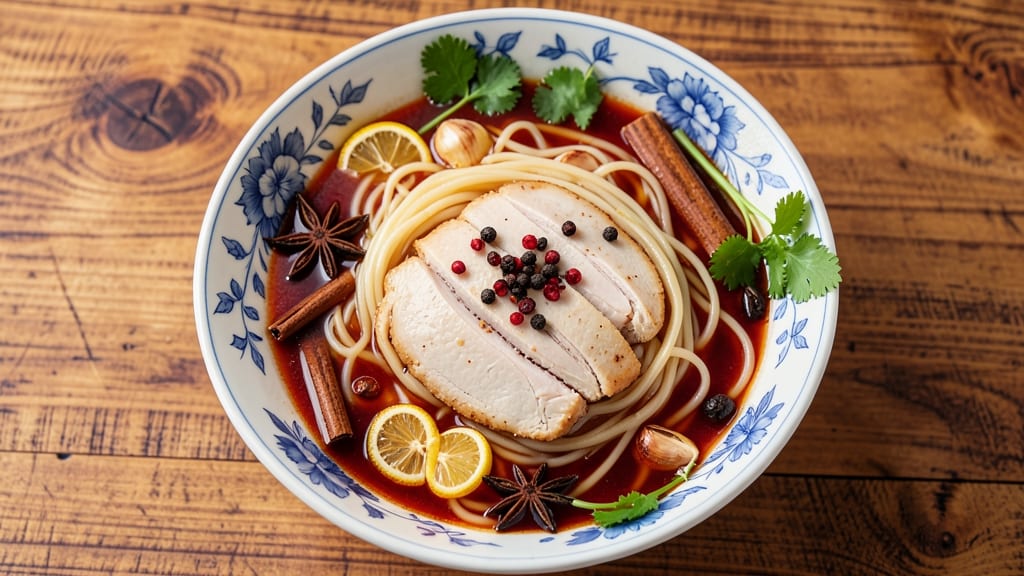
This authentic Chinese chicken noodle soup delivers the comforting, aromatic harmony of star anise and ginger in every bowl. 🌟 The secret lies in building a clear, umami-rich broth from scratch—simmering ginger, garlic, and aromatic spices until they release their full depth.
I've perfected this recipe over years of home cooking, ensuring the broth remains crystal-clear while packing layers of flavor that transport you to a bustling Chinese eatery.
The foundation is a slow-simmered chicken stock infused with star anise, cinnamon, and Sichuan peppercorns—subtle spices that create complex warmth without overpowering. Fresh ginger and garlic form the base, while goji berries and shiitake mushrooms add natural sweetness and earthy depth.
This isn't just soup; it's a carefully balanced symphony of textures and flavors that Chinese grandmothers have perfected for generations.
What sets this apart is the attention to authenticity: the broth must be clear yet flavorful, the noodles al dente but tender, and the garnishes—crisp green onions, fresh cilantro, and a drizzle of chili oil—must elevate each bite.
The result is a restaurant-quality bowl that's both nourishing and deeply satisfying, perfect for healing meals or cozy family dinners.
Ready in under an hour, this recipe delivers professional results without requiring advanced techniques. The key is patience—letting the broth develop its rich, aromatic character while keeping the noodles perfectly cooked.
Serve immediately with lime wedges for brightness and extra chili oil for heat lovers. Here's how to make it perfectly every time.
Ingredients for authentic chinese chicken noodle soup
The aromatic foundation of this authentic Chinese chicken noodle soup begins with star anise and ginger.
| Ingredient | Amount | Notes |
|---|---|---|
| Chicken Breast 🍗 | 1 ½ lb | Boneless, skinless, cut into 1-inch pieces |
| Fresh Ginger Root 🧄 | 2 tbsp | Finely minced, organic preferred |
| Garlic Cloves 🧄 | 6 cloves | Peeled, smashed for deeper flavor |
| Star Anise 🌟 | 2 whole | High-quality, whole pods |
| Cinnamon Sticks 🌿 | 2 whole | Ceylon cinnamon preferred |
| Sichuan Peppercorns 🌶️ | 1 tsp | Toasted for aromatic depth |
| Dried Shiitake Mushrooms 🍄 | 4 whole | Rehydrated in hot water |
| Goji Berries 🍇 | 1 tbsp | Dried, rinsed before use |
| Green Onions 🧅 | 4 whole | White and green parts separated |
| Fresh Cilantro 🌿 | ¼ cup | Chopped, stems removed |
| Egg Noodles 🍜 | 8 oz | Fresh or dried, al dente texture |
| Lime Wedges 🍋 | 2 whole | For serving, freshly cut |
| Chili Oil 🌶️ | 2 tbsp | For garnish, optional |
| Diamond Crystal Kosher Salt 🧂 | 1 ½ tsp | For seasoning, adjust to taste |
| Black Peppercorns 🌶️ | ½ tsp | Freshly cracked |
For the broth's signature depth, source whole star anise and Ceylon cinnamon from specialty stores like Whole Foods or Asian markets—they carry higher-quality, authentic spices. Sichuan peppercorns are non-negotiable; the toasted variety from Penzeys delivers that signature numbing warmth. Fresh ginger and garlic should be organic when possible, as conventional varieties often contain waxes that can cloud the broth. The shiitake mushrooms should be dried for maximum umami—rehydrate them in hot water before adding to the broth. Goji berries add subtle sweetness; look for organic, seedless varieties at health food stores.
No star anise? A pinch of anise seed works in a pinch, though it lacks the same depth. Cinnamon sticks can be swapped for ground cinnamon (½ tsp), but the texture differs. Fresh ginger is ideal, but powdered ginger at half the amount suffices if needed. For Sichuan peppercorns, black pepper at double the quantity mimics the heat, though it lacks the citrusy aroma. Dried shiitake mushrooms can be replaced with cremini mushrooms (½ cup sliced), but the broth will be less rich. Egg noodles should be fresh or high-quality dried; avoid pre-cooked varieties, as they overcook easily. Chili oil can be homemade with toasted chili flakes and neutral oil if store-bought isn't available.
Store fresh ginger, garlic, and green onions in the fridge for up to 1 week, wrapped in damp paper towels. Dried spices like star anise, cinnamon, and Sichuan peppercorns keep for 6-12 months in an airtight container. Rehydrated shiitake mushrooms can be refrigerated for 3 days or frozen for 3 months. Egg noodles last 1 month unopened; once cooked, consume within 2 days. The broth itself reheats beautifully—simmer gently to preserve clarity, and add a splash of hot water if it thickens. Garnishes like cilantro and lime should be added fresh at serving to maintain brightness.
Why You'll Love This Recipe
- No-Chop Nightmare: I swear by this recipe when I’m too tired to julienne ginger. Just grate the root, smash a few garlic cloves, and toss them in whole—no knife skills required. The star anise and cinnamon sticks infuse the broth like magic while you’re busy doing other things (or pretending to).
- Umami Bomb: That first sip? Pure satisfaction. The ginger and garlic caramelize into the broth, while the star anise and cinnamon add warmth without overpowering. It’s the kind of flavor that makes you pause mid-slurp—like a hug in soup form.
- Leftover Goldmine: This soup tastes better the next day. Honestly, I make a double batch on Sundays because it’s the easiest way to feed the family all week. Reheat it, add a splash of water, and boom—comfort food on demand.
- Pocketbook Hero: Chicken breast and fresh ginger might sound fancy, but they’re budget-friendly staples. A single breast stretches for two meals, and the spices cost pennies. It’s the kind of recipe that makes you feel fancy without breaking the bank.
Step-by-step instructions for authentic Chinese chicken noodle soup
Here's the method for creating a deeply aromatic, restaurant-quality Chinese chicken noodle soup.
🍳 Step 1: Sear the Chicken and Build the Aromatic Base
Heat a large pot over medium-high heat and add the 1.5 lb chicken breast cut into 1-inch pieces. Let the chicken sear undisturbed for 3-4 minutes until golden brown on all sides. This step develops a rich foundation flavor through the Maillard reaction.
Remove the chicken and set aside. In the same pot, add 2 tablespoons of the minced fresh ginger root and 6 smashed garlic cloves. Sauté for 1 minute until fragrant. Add the 2 whole star anise, 2 whole cinnamon sticks, and 1 teaspoon Sichuan peppercorns. Toast these spices for 30 seconds until you can smell their aromatic oils releasing.
🍳 Step 2: Simmer the Broth with Dried Ingredients
Pour in 8 cups of water (or enough to cover the chicken) and bring to a boil. Reduce heat to low and add the seared chicken back to the pot. Let it simmer uncovered for 20 minutes to extract maximum flavor from the spices and chicken.
Add the 4 whole dried shiitake mushrooms (previously rehydrated) and 1 tablespoon goji berries. These ingredients will infuse the broth with umami depth and subtle sweetness. Simmer for another 15 minutes until the chicken is fully cooked and the broth develops a rich, golden hue.
🍳 Step 3: Season and Add Fresh Ingredients
Season the broth with 1.5 teaspoons Diamond Crystal kosher salt and 0.5 teaspoon freshly cracked black peppercorns. Taste and adjust the seasoning—authentic Chinese broth should be well-seasoned but balanced, not overly salty.
Add the 8 oz egg noodles and cook according to package instructions until al dente. The noodles should absorb the flavorful broth rather than turning mushy. In the last 2 minutes of cooking, stir in the white parts of 4 whole green onions (chopped) to infuse their mild onion flavor.
🥘 Step 4: Finish with Fresh Herbs and Garnishes
Remove the pot from heat and stir in the 0.25 cup chopped fresh cilantro. This adds a bright, fresh contrast to the rich broth. Ladle the soup into bowls, garnishing each serving with the green parts of 4 whole green onions (sliced) and a drizzle of 2 tablespoons chili oil.
Serve immediately with 2 whole lime wedges on the side. The lime juice adds a tangy brightness that cuts through the richness of the soup, completing the authentic Chinese flavor profile. Each bowl should be aromatic, deeply flavorful, and perfectly balanced.
Pro Tips For Making Authentic Chinese Chicken Noodle Soup
- BLANCH CHICKEN FIRST: Skip the slow simmer for now—parboil the chicken breast in salted water for 8 minutes, then shock in ice water. This guarantees tender meat without drying out, and the broth will absorb all that juiciness when you add it back later. (Yes, even if you’re impatient like me, the extra 10 minutes here saves you from rubbery chicken.)
- GRATE GINGER FINE: I used to chop ginger roughly and wondered why my soup lacked depth. For this recipe, use a microplane or the smallest holes of a box grater—you want it almost paste-like. The finer the surface area, the more flavor it releases into the broth. (And no, pre-minced ginger from the jar won’t cut it.)
- DON’T BOIL THE AROMS: Star anise and cinnamon sticks are delicate—once the broth hits a rolling boil, their flavors turn bitter. Simmer them at a gentle bubble (just small ripples) for 15 minutes, then remove them before adding noodles. Overcooking them is the fastest way to ruin an otherwise perfect soup.
- USE COLD NOODLES: Toss your cooked noodles under cold water before adding them to the hot broth. This stops them from turning mushy and sticking together. (I learned this the hard way after serving a bowl of gluey noodles—trust me, you don’t want that.)
Essential equipment for authentic chinese chicken noodle soup
Stockpot Essentials
Start with a large, heavy-bottomed stockpot—I recommend a 5-6 quart stainless steel pot like All-Clad or Le Creuset for even heat distribution. The depth ensures the broth can develop properly without boiling over, while the material prevents scorching. A tight-fitting lid is crucial for maintaining moisture during simmering. 🌡️
For authentic results, use a stainless steel or enamel pot—avoid nonstick or aluminum, as they can react with the spices and alter the broth's flavor. If you're making this frequently, consider a dedicated soup pot with a built-in strainer for easy broth separation.
I keep mine on a low, stable burner to prevent temperature fluctuations.
Spice Toasting Tools
A small, heavy skillet (like a carbon steel wok) is perfect for toasting whole spices—star anise, cinnamon sticks, and Sichuan peppercorns—before adding them to the broth. The high heat releases their aromatic oils, which is key for that authentic Chinese depth.
A mortar and pestle comes in handy if you need to crush any spices, though whole pods work best here. 🌶️
For Sichuan peppercorns, a lightly oiled paper towel helps contain the numbing oils when toasting. I also keep a fine-mesh strainer nearby to remove spices after simmering—this ensures a clear, elegant broth without bits.
A wooden spoon is ideal for stirring, as metal can scratch enamel or stainless steel over time.
Noodle Prep Gear
Fresh egg noodles require quick cooking, so a fine-mesh colander and sharp chef's knife are must-haves. I use 8 oz of fresh noodles (or high-quality dried) and cut them into 1-inch lengths for even cooking. A timer is non-negotiable—Chinese noodles cook in just 2-3 minutes, so precision matters. 🕒
For extra authenticity, a rolling pin helps flatten homemade noodles if you're making them from scratch. Store-bought noodles should be rinsed briefly before adding to the broth to remove excess starch.
A ladle with a strainer makes plating easier, allowing you to serve broth and noodles together without overcrowding the bowl.
Garnish Station
Fresh green onions, cilantro, and lime wedges need a small cutting board and sharp knife for quick prep. I slice green onions into ½-inch pieces, reserving the greens for garnish.
A microplane is great for zesting lime if you want extra brightness. Keep chili oil in a small squeeze bottle for easy drizzling—this adds heat without overwhelming the soup. 🌿
A small bowl for holding garnishes keeps everything organized while serving. I also keep a pair of tongs handy to adjust garnishes after the soup is served. For presentation, a clear glass bowl lets diners see the golden broth and al dente noodles—a hallmark of authentic Chinese soups.
Nutrition facts
Frequently asked questions
Why does authentic Chinese chicken noodle soup use star anise and Sichuan peppercorns?
These spices create the signature aromatic depth of Chinese soups. Star anise adds a subtle licorice-like sweetness while Sichuan peppercorns bring that signature numbing warmth. Together, they build complex layers of flavor that simple garlic and ginger can't match. The key is toasting them first to release their essential oils before simmering.
Can I make this soup with chicken thighs instead of breast?
Chicken thighs actually work better—they're more flavorful and stay tender during long simmering. Use 1.5 lb bone-in, skin-on thighs instead, and reduce simmering time to 15 minutes after adding them (they cook faster than breast). The skin adds richness to the broth, and the bones contribute extra collagen for a silkier texture.
What's the secret to a clear broth without losing flavor?
The magic is in the simmering technique. Keep the broth at a gentle low boil (tiny bubbles) rather than a rolling boil, and skim any foam that rises. Strain out spices after simmering, but don't over-filter—some aromatic oils should remain. The secret ingredient? Dried shiitake mushrooms and goji berries add umami depth without clouding the broth.
How can I adjust the spice level for kids or sensitive eaters?
Skip the Sichuan peppercorns and reduce chili oil to 1 teaspoon per bowl. For extra mildness, strain the broth through a fine-mesh sieve to remove any lingering spice particles. Serve with extra lime wedges instead—the acidity helps balance any remaining heat while keeping the dish bright and refreshing.
Can I make this soup ahead of time?
Yes! Prepare the broth up to 2 days ahead and store it covered in the fridge. Reheat gently on low heat, skimming any congealed fat. Cook the noodles fresh when serving—they absorb the broth better when hot. For the best texture, add fresh cilantro and lime just before eating to keep the flavors vibrant.