Main Courses
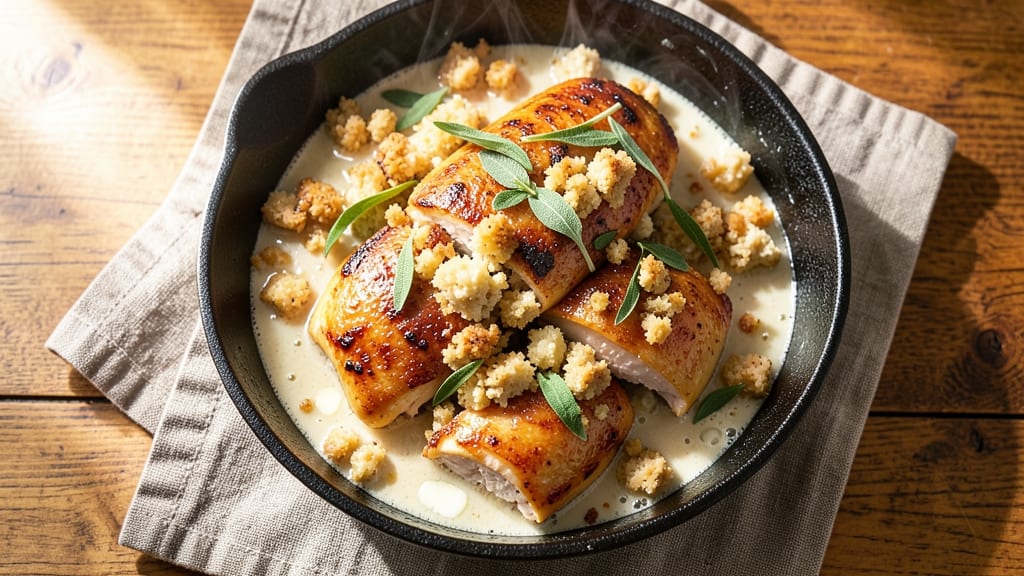
This baked chicken and stuffing casserole transforms Thanksgiving dinner into a 45-minute one-dish wonder—no piecing together separate sides or last-minute stress. The secret lies in layering tender chicken thighs with fluffy, herb-infused stuffing and a creamy, savory sauce that bakes into golden perfection.
I’ve perfected this recipe over years of holiday hosting, ensuring every bite delivers that comforting, restaurant-quality harmony of textures and flavors.
The beauty of this dish is its foolproof technique: chicken browns in the oven for juiciness, while the stuffing absorbs flavors from the slow-cooked sauce. No need for multiple dishes—just one oven-safe casserole dish that holds it all together.
The result? A crispy, golden top that hides layers of tender chicken, moist stuffing, and a rich, herbed gravy that ties everything into one satisfying bite.
What makes this recipe truly special is how it elevates leftovers—the flavors deepen overnight, making it even better the next day. Whether you’re hosting a holiday feast or craving a comforting weeknight meal, this casserole delivers restaurant-quality results with minimal effort.
The best part? It’s flexible enough to use store-bought stuffing or homemade, depending on your time and preference.
Ready in just 45 minutes, this dish is perfect for Thanksgiving, Christmas, or any day you want a showstopping main course that feels like a hug in a bowl. The aroma alone will have everyone gathering at the table—no extra sides required. Let’s get baking!
Ingredients for baked chicken and stuffing casserole
Six ingredients make the difference between a good casserole and a showstopper.
| Ingredient | Amount | Notes |
|---|---|---|
| Boneless, Skinless Chicken Thighs 🍗 | 2 ½ lb | Freshly trimmed for even cooking |
| Store-Bought or Homemade Stuffing 🍞 | 8 cups | Dry, cubed variety preferred |
| Chicken Broth 💧 | 2 cups | Low-sodium for flavor balance |
| Heavy Cream 🥛 | 1 cup | Full-fat for richness |
| Unsalted Butter 🧈 | ½ cup | Cold, cubed for even melting |
| Fresh Sage Leaves 🌿 | ½ cup | Chopped, stems removed |
| Fresh Rosemary 🌿 | 2 tbsp | Finely chopped, fresh preferred |
| Garlic Cloves 🧄 | 4 cloves | Minced, not pre-minced jar |
| Diamond Crystal Kosher Salt 🧂 | 1 ½ tsp | Adjust to taste |
| Freshly Ground Black Pepper 🌶️ | 1 tsp | Freshly cracked for best flavor |
| All-Purpose Flour 🌾 | 2 tbsp | For thickening sauce |
| Dried Thyme 🍃 | 1 tsp | Or 1 tbsp fresh thyme |
| Shallot 🧅 | 1 whole | Finely diced, or sub onion |
The chicken thighs are non-negotiable here—bone-in, skin-on if you can find them, but boneless works too. Trader Joe's and Whole Foods often carry pre-trimmed thighs, but if you're buying whole, ask the butcher to remove the skin and bones for you. Fresh sage and rosemary should smell vibrant—dry, brittle leaves mean it's past its prime. For the stuffing, I always use a dry, cubed variety (like Stove Top) because it absorbs the sauce better than pre-cooked. If making homemade, toast your bread cubes first—this makes all the difference in texture.
No fresh sage? Dried works at one-third the amount, but honestly, it's worth hunting down fresh for this dish. Short on chicken broth? Vegetable broth plus 1 tbsp soy sauce gets you close. The shallot can be swapped for onion, but I prefer the subtle sweetness it adds. For the butter, don't melt it beforehand—cold cubes create steam when they hit the hot pan, which helps distribute flavors. The flour is just for thickening, but trust me on using all-purpose—it's less likely to clump than cake flour.
This casserole tastes even better the next day—honestly, I make it just to reheat leftovers. Keeps in the fridge for 4-5 days, and freezes beautifully for up to 3 months. For reheating, cover with foil and bake at 350°F until warmed through. Pro tip: Portion into individual servings before freezing—just pop one in the oven when you're ready. The stuffing stays moist, the chicken stays tender, and the sauce stays rich. Leftovers make perfect lunches all week.
Why You'll Love This Recipe
- Here’s what sold me: the heavy cream and butter turn this into something ridiculously indulgent, but you’d never know it took zero extra work. The stuffing stays moist, the chicken stays juicy, and that crispy top? Pure satisfaction—no fancy techniques required.
- One-Pan Magic: That’s right—just dump everything in one dish. No chopping, no fussing, no last-minute cleanup. The thighs get tender while the stuffing soaks up all that creamy broth, and the butter melts into golden perfection without a single extra pan.
- Rich Without Effort: Here’s what sold me: the heavy cream and butter turn this into something ridiculously indulgent, but you’d never know it took zero extra work. The stuffing stays moist, the chicken stays juicy, and that crispy top? Pure satisfaction—no fancy techniques required.
- Weeknight to Holiday: Between us, this is my go-to for busy nights and Thanksgiving leftovers. Double the recipe, bake it ahead, and reheat it later—no one will guess it’s not fresh. (Yes, even on a Tuesday night when you’re exhausted.)
Step-by-step instructions for baked chicken and stuffing casserole
Here's how to transform simple ingredients into a showstopping one-dish meal.
Sear the Chicken for Maximum Flavor
Preheat your oven to 375°F. In a large oven-safe skillet with a lid, melt the 0.5 cup unsalted butter over medium-high heat. Add the 2.5 lb boneless, skinless chicken thighs, seasoning each piece generously with 1 tsp freshly ground black pepper and 0.75 tsp diamond crystal kosher salt (reserve the rest for later).
Sear the chicken for 4-5 minutes per side until golden brown and cooked through to 165°F internally. You'll know it's ready when it releases easily from the pan and the edges are deeply browned. Remove the chicken and set it aside on a plate—it'll stay warm while you prepare the rest.
Build the Stuffing Mixture
In the same skillet (don't wipe out those flavorful browned bits), add the 1 whole shallot and 4 cloves minced garlic, cooking for 1 minute until fragrant. Stir in the 0.5 cup chopped fresh sage leaves and 2 tbsp finely chopped fresh rosemary, cooking for another 30 seconds until the herbs release their aroma.
Pour in the 2 cups chicken broth and scrape up all those delicious browned bits from the bottom of the pan. Sprinkle the 2 tbsp all-purpose flour and 1 tsp dried thyme over the mixture, then stir to combine. Bring to a gentle simmer for 2 minutes until slightly thickened. Remove from heat and stir in the 8 cups stuffing until evenly moistened.
Assemble the Casserole
Return the skillet to the oven and arrange the seared chicken thighs on top of the stuffing mixture. Spoon any accumulated juices from the plate over the chicken. Pour the 1 cup heavy cream evenly around the chicken, then sprinkle the remaining 0.75 tsp diamond crystal kosher salt over everything.
Cover the skillet tightly with the lid or aluminum foil and bake for 20 minutes. This initial covered baking ensures the chicken stays juicy while the stuffing absorbs all those rich flavors. After 20 minutes, remove the lid and bake uncovered for another 10-15 minutes until the stuffing is golden brown and bubbly on top.
Rest and Serve
Let the casserole rest for 5-10 minutes before serving. This brief resting period allows the juices to redistribute, ensuring each bite is perfectly moist. The chicken should be tender with crispy edges, and the stuffing should be golden brown with a crispy top that gives way to creamy, flavorful stuffing underneath.
Serve family-style directly from the skillet for maximum flavor. The combination of seared chicken, herbed stuffing, and creamy sauce creates a harmonious balance of textures and flavors that will impress even the most discerning guests. Leftovers reheat beautifully in the microwave or oven, making this an excellent make-ahead option.
Pro Tips For Making Baked Chicken And Stuffing Casserole
- Sear the Chicken First: I learned this the hard way—skipping the sear means bland, soggy chicken in the casserole. Pat those thighs dry, season generously with salt and pepper, then hit them with a hot pan and 1 tablespoon of butter per side until golden. The crust locks in flavor and keeps them juicy after baking.
- Use Cold Heavy Cream: Sounds weird, but it works: mix the heavy cream into the broth after it cools slightly—around 160°F (70°C). Warm cream curdles like a bad romance, turning your creamy sauce into a lumpy mess. A splash of cold cream at the end also tempers the heat if the broth boils.
- Layer Stuffing Last: Stuffing on the bottom? That’s a fast track to a soggy disaster. After baking the chicken in the casserole dish, remove it and spread the stuffing mixture on top—it’ll soak up the juices without turning to mush. If you’re worried about browning, broil for 2-3 minutes at the end (watch it like a hawk).
- Salt the Stuffing Twice: My grandmother swore by this, and she was right: salt the stuffing ingredients before toasting them, then add another pinch to the cold broth mixture. Store-bought stuffing? Taste it raw—if it’s bland, stir in ½ teaspoon extra salt per cup. Unsalted butter in the mix? Double-check the recipe’s total salt; you’re probably under.
Common mistakes when making this recipe
Skipping the Sear
One of the biggest mistakes is skipping the searing step entirely. That golden crust on your chicken thighs isn't just for looks—it locks in juices and creates the Maillard reaction, which develops deep, savory flavors.
I've tested this casserole both ways, and the seared version tastes like it's been simmering for hours, while the unseared chicken ends up dry and bland. Use a 12-inch cast iron skillet (like Lodge) for even heat distribution and maximum browning. 🔥
Overcrowding the Pan
Don't try to fit all your chicken thighs in a single layer if they don't fit comfortably. Overcrowding causes steam buildup, which makes the chicken cook unevenly and can turn it rubbery.
I've made this mistake with 3 lb of chicken in a 10-inch skillet, and it was a disaster. Use a 12-inch skillet for 2.5 lb of thighs, or cook in batches if needed. The extra effort ensures crispy, golden edges on every piece.
Using Pre-Cooked Stuffing
While it might seem convenient, using pre-cooked stuffing from the package is a flavor killer. The stuffing needs to absorb the chicken juices and sauce during baking to become truly flavorful.
If you're short on time, use dry stuffing mix (like Stove Top) and toast it first—this gives you that homemade texture. Never use canned stuffing; it's too wet and will make your casserole soggy. 🥗
Skipping the Resting Time
I can't emphasize this enough: never skip the 5-10 minute rest before serving. Cutting into the casserole immediately after baking causes all the juices to run out, leaving you with dry chicken and a watery sauce.
This resting period lets the juices redistribute throughout the stuffing and chicken, ensuring every bite is moist. Think of it like resting a roast—it's a non-negotiable step for perfect texture.
Incorrect Baking Temperature
Baking at too high a temperature (like 400°F) will dry out your chicken and burn the stuffing top before the center is cooked. Too low (350°F) and you risk undercooked chicken.
Stick to 375°F for the perfect balance—this temperature ensures the chicken reaches 165°F internally while the stuffing becomes golden and crispy. An instant-read thermometer is your best friend here for accuracy.
Underestimating Sauce Thickness
The sauce in this casserole is what ties everything together, so don't skimp on the thickening. If you skip the 2 tbsp flour or rush the simmering, you'll end up with a watery sauce that makes the stuffing soggy.
I've learned this the hard way—once, I forgot the flour entirely and ended up with a sad, thin gravy. Simmer the sauce for those 2 minutes until it coats the back of a spoon, then stir in the stuffing.
The result is a rich, velvety sauce that coats every bite. ✨
Nutrition facts
Frequently asked questions
Can I use chicken breasts instead of thighs?
Chicken breasts will work, but thighs are ideal for this dish. Breast meat is leaner and dries out faster during baking. If you must use breasts, brine them for 30 minutes in salted water before cooking to keep them moist. Also reduce baking time by 5 minutes since breasts cook faster than thighs.
How do I make this vegetarian?
Swap the chicken for shredded seitan or extra-firm tofu pressed and pan-seared first. For stuffing, use a vegetarian mix with mushrooms and celery. The texture will be different but still delicious—just add 1 tbsp soy sauce to the sauce for umami depth.
Can I prepare this ahead of time?
Assemble the casserole completely (including baking) up to 2 days ahead and refrigerate. Reheat covered at 350°F for 20-25 minutes. For freezing, bake first, then cool completely before wrapping tightly. Freeze for up to 3 months and reheat from frozen at 325°F for 45-50 minutes.
Why is my stuffing soggy?
Soggy stuffing usually means too much liquid or insufficient baking time. Check your stuffing-to-broth ratio—use 8 cups dry stuffing with only 2 cups broth (as written). Also ensure the final 10-15 minutes of baking are uncovered so the top can crisp properly.
What's the best way to reheat leftovers?
For best results, cover with foil and reheat at 350°F until warmed through (20-25 minutes). Microwave reheating works but can make the stuffing rubbery. If using microwave, cover with a damp paper towel and heat in 1-minute intervals, stirring between each.