
Main Courses
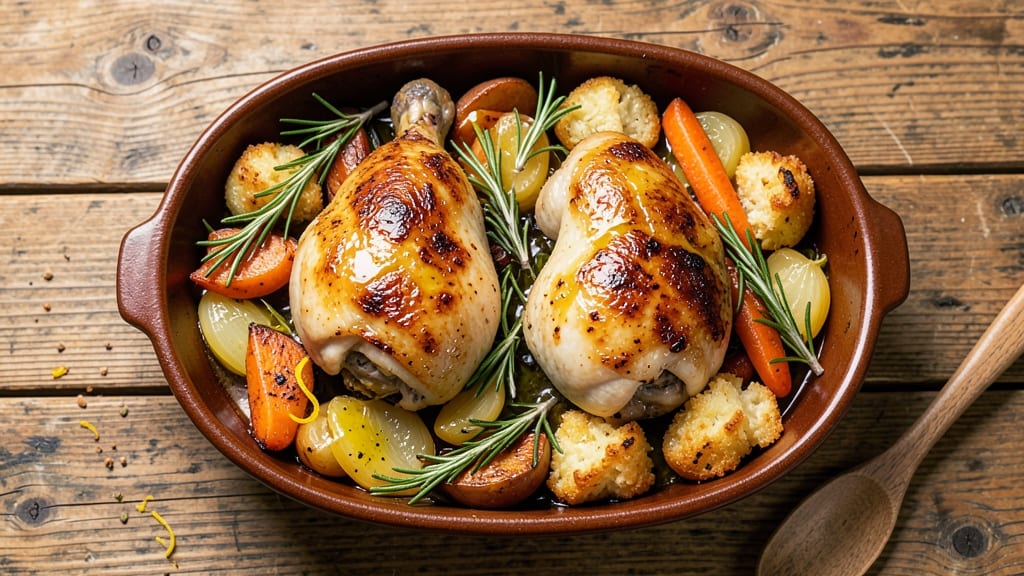
This baked chicken legs with vegetables recipe delivers perfectly crisp skin and tender meat with minimal effort—ideal for weeknight dinners or meal prep. The secret lies in a simple herb marinade and high-heat roasting, transforming tough cuts into juicy, flavorful bites while vegetables caramelize in the same pan.
No fancy techniques required, just a foolproof method that guarantees restaurant-quality results every time.
Start with bone-in chicken legs, their natural fat rendering into crispy golden skin while the meat stays succulent inside. Pair them with seasonal vegetables—potatoes, carrots, or Brussels sprouts—that roast alongside, absorbing the same savory herb flavors.
The 30-minute active prep and 45-minute bake time make this a hands-off meal perfect for busy schedules, yet it feels special enough for company.
What you’ll end up with is a juicy, herb-infused centerpiece surrounded by caramelized vegetables, all ready to serve with a sprinkle of fresh parsley or a drizzle of honey for brightness.
The crispy skin contrasts beautifully with the tender meat, while the vegetables add texture and color to every plate. This recipe proves that simple ingredients and smart techniques can create a standout main course without the fuss.
The beauty of this dish lies in its versatility—swap vegetables based on what’s fresh, adjust the herbs to your taste, or even double the batch for leftovers. Serve with crusty bread to soak up the pan juices or pair it with a light salad for balance.
Here’s how to achieve perfectly roasted chicken legs with vegetables that steal the show.
Ingredients for baked chicken legs with vegetables
Herb-infused oil, seasonal vegetables, and bone-in chicken legs transform into a restaurant-worthy weeknight meal.
| Ingredient | Amount | Notes |
|---|---|---|
| Bone-In Chicken Legs 🍗 | 4 whole | Thighs with drumsticks, skin-on preferred |
| Yellow Onion 🧅 | 1 whole | Large, sliced into wedges |
| Carrots 🥕 | 1 lb | Baby or regular, cut into chunks |
| Russet Potatoes 🥔 | 2 lb | Cut into 2-inch chunks |
| Extra-Virgin Olive Oil 🫒 | ½ cup | For roasting and marinade |
| Fresh Rosemary 🌿 | ¼ oz | Finely chopped, stems removed |
| Fresh Thyme 🌿 | ¼ oz | Leaves only, finely chopped |
| Garlic Cloves 🧄 | 6 cloves | Minced or pressed |
| Diamond Crystal Kosher Salt 🧂 | 1 ½ tbsp | For seasoning and marinade |
| Freshly Ground Black Pepper 🌶️ | 1 tbsp | Coarse grind preferred |
| Honey 🍯 | 1 tbsp | For glaze, optional |
| Fresh Parsley 🌿 | ¼ cup | Chopped, for garnish |
The chicken legs are the foundation—look for bone-in, skin-on thighs with drumsticks at Whole Foods or your local butcher. The natural fat in the skin renders beautifully for crispy results. If using frozen, thaw overnight in the fridge. For the vegetables, Trader Joe's has excellent pre-cut carrots and potatoes, but fresh is always better. The key is even-sized chunks so everything cooks uniformly. If you prefer Brussels sprouts, halve them and trim the tough ends.
No fresh rosemary? Dried works at one-third the amount, but fresh has superior aroma. The honey glaze is optional but adds a lovely caramelized finish—substitute maple syrup for a vegan option. For extra depth, toast the garlic cloves in the olive oil for 30 seconds before mincing. The kosher salt is crucial; Diamond Crystal dissolves more easily than table salt. If you're short on time, baby carrots and pre-cut potatoes save prep work without sacrificing flavor.
Store any leftovers in an airtight container for up to 4 days—they reheat beautifully. For meal prep, portion the chicken and vegetables separately and reheat at 375°F for 15 minutes. The crispy skin softens slightly but remains delicious. Freeze portions for up to 3 months by wrapping tightly in foil. The herbs lose potency after 3 days, so garnish fresh parsley just before serving for maximum brightness.
Why You'll Love This Recipe
- One-Pan Magic: I swear by this recipe because it’s literally dump-and-bake. Toss everything—chicken, potatoes, carrots, onion—on a sheet pan, drizzle with olive oil, and let the oven do the work. No pots, no pans, no stress.
- Crispy-Creamy Perfection: That golden-brown skin on the chicken legs? Chef’s kiss. The bone-in secret keeps them juicy while the olive oil and roasted veggies caramelize into something dangerously addictive. (Yes, I’ve been known to eat them straight off the pan.)
- Leftovers That Don’t Suck: Unlike takeout or sad fridge meals, these reheat like a dream—crispy edges stay crispy, potatoes don’t turn to mush. Honestly, I make double batches just to have them for lunch the next day.
- Budget Meal for Busy Nights: Bone-in chicken legs are cheaper than breasts, and potatoes/carrots stretch flavors without breaking the bank. Between us, this is my go-to when I’ve got a house full of people and zero energy to slave over a stove.
Step-by-step instructions for herb-roasted chicken legs with vegetables
This method delivers perfectly crisp skin and juicy meat with tender vegetables every time.
Prep and Marinate the Chicken Legs
Begin by patting the 4 whole bone-in chicken legs completely dry with paper towels—this is crucial for crispy skin. In a large bowl, combine the 0.5 cup extra-virgin olive oil, 1.5 tablespoons diamond crystal kosher salt, 1 tablespoon freshly ground black pepper, 1 tablespoon honey, 0.25 ounce finely chopped fresh rosemary, 0.25 ounce fresh thyme, and 6 minced garlic cloves. Whisk until fully emulsified.
Place the chicken legs in the bowl and turn to coat thoroughly on all sides. Let them marinate for at least 30 minutes at room temperature—this ensures even seasoning and helps develop flavor. For best results, I recommend marinating for up to 2 hours in the refrigerator, allowing the skin to become more permeable for deeper flavor penetration.
Prepare and Season the Vegetables
While the chicken marinates, slice the 1 whole yellow onion into wedges and cut the 1 pound carrots into 1-inch chunks. Peel and cut the 2 pounds russet potatoes into 2-inch chunks—this size ensures they cook evenly without becoming mushy. Spread all vegetables on a large baking sheet and toss gently with any remaining marinade from the bowl.
Season the vegetables lightly with an additional ½ teaspoon diamond crystal kosher salt and ¼ teaspoon freshly ground black pepper. The vegetables should be well-coated but not soggy. Arrange them in a single layer on the baking sheet, leaving space between pieces for proper air circulation. This step prevents steaming and ensures crispy edges on the vegetables.
Roast the Chicken and Vegetables
Preheat your oven to 425°F with the rack positioned in the middle position. Arrange the marinated chicken legs skin-side up on a separate baking sheet lined with aluminum foil, leaving space between each piece. Place the baking sheet with vegetables on the lower rack and the chicken on the upper rack—this creates a temperature gradient that crisps the chicken skin while gently cooking the vegetables.
Roast for 45 minutes, then carefully flip the chicken legs and rotate the vegetables. Return to the oven and continue roasting for another 20-25 minutes, until the chicken skin is deep golden brown and crispy, and the internal temperature reaches 165°F when measured at the thickest part of the thigh. The vegetables should be tender when pierced with a fork but still hold their shape.
Finish and Garnish
Once the chicken reaches the proper temperature, transfer it to a cutting board and tent loosely with aluminum foil. Let it rest for 10 minutes—this crucial step allows the juices to redistribute, ensuring every bite remains moist and flavorful. During this time, transfer the vegetables to a serving platter and drizzle any accumulated pan juices over the top.
Garnish the dish with the 0.25 cup chopped fresh parsley just before serving. The parsley adds a bright contrast to the rich, herbed flavors of the chicken and vegetables. Serve immediately with the crispy chicken legs and tender vegetables piled together, allowing diners to enjoy the perfect balance of textures and flavors in every bite.
Pro Tips For Making Baked Chicken Legs With Vegetables
- CRANK THE HEAT FIRST: Start your chicken legs on 425°F (220°C) for the first 15 minutes—no joke, this locks in crispy skin before the veggies even think about getting involved. I used to bake at 375°F and wondered why my skin stayed sad and greasy. High heat = instant golden crust.
- CUT POTATOES UNEVENLY: Toss your russets into chunks of varying sizes—no need for perfect uniformity. The larger pieces stay firm while the smaller ones caramelize, and that’s exactly what you want. I learned this the hard way when my first batch turned to mush in one spot and stayed raw in another.
- SALT THE CHICKEN TWICE: Season the legs before baking, then again halfway through when you flip them. The first salt draws out moisture (good for crispiness), and the second ensures flavor penetrates all the way through. Skip this, and you’re left with bland, dry meat—trust me, I’ve been there.
- USE CARROT SLICES, NOT STICKS: Thinly slice the carrots lengthwise (about ¼-inch thick) so they cook faster and absorb flavor better than whole sticks. They’ll soften perfectly alongside the potatoes without turning to mush. Yes, it takes 2 minutes extra, but the result is worth it.
Storing and reheating your baked chicken legs with vegetables
Refrigerator Storage
Let your herb-roasted chicken legs and vegetables cool completely before storing—this prevents condensation that can make the skin soggy. Transfer everything to an airtight container (I love Glasslock containers) within 2 hours of cooking.
Store at 40°F or below for up to 4 days, with the chicken and vegetables kept separate to maintain texture. The flavors actually deepen overnight as the herbs meld further. 💫
Freezer Storage
For longer storage, freeze the chicken legs and vegetables separately in ziplock freezer bags (remove excess air to prevent freezer burn). Label with the date—they’ll keep for 3 months without significant quality loss.
When ready to reheat, thaw overnight in the fridge or use the microwave’s defrost setting. The crispy skin will soften slightly but remains delicious when reheated properly. 🥶
Stovetop Reheating
My preferred method for maintaining texture is stovetop reheating. Place chicken legs and vegetables in a skillet over medium heat with 1 tablespoon olive oil and 2 tablespoons water or chicken broth.
Cover and heat for 8-10 minutes, stirring occasionally, until reaching 165°F internal temperature. The oil helps restore some crispiness to the skin while keeping the meat juicy. 🔥
Oven Reheating
For a hands-off approach, reheat in a 375°F oven for 15-20 minutes on a baking sheet lined with foil. Place chicken legs skin-side up and vegetables in a single layer. The residual heat from the oven will gently warm everything while preserving the caramelized edges.
This method works especially well for meal prep—just pop in the oven when ready to serve. ⏰
Microwave Safety
If you're short on time, microwave reheating works but requires care. Place chicken and vegetables on a microwave-safe plate, cover loosely with a damp paper towel, and heat in 1-minute intervals on 70% power.
Stir between intervals to distribute heat evenly. The skin may lose some crispiness, but the meat stays tender. For best results, add 1 tablespoon water to the plate to create steam. 💡
Leftovers Reinvention
Turn leftover chicken legs into chicken salad by shredding the meat and mixing with mayonnaise, celery, and lemon juice. Use the roasted vegetables in frittatas or grain bowls for a quick lunch.
The herb flavors work beautifully in sandwiches with crusty bread or as a topping for pasta salads. Get creative—there are endless ways to repurpose this versatile meal! 🌟
Nutrition facts
Frequently asked questions
Why do you recommend bone-in chicken legs instead of boneless?
The bone keeps the meat incredibly juicy while roasting—it acts like a natural thermometer, cooking the meat evenly from the inside out. Plus, bone-in cuts deliver that coveted crispy skin and rich flavor that boneless thighs can't match. For a similar texture, try drumsticks with attached thighs.
Can I use frozen chicken legs in this recipe?
Yes, but thaw them completely first in the fridge overnight. Never use frozen chicken straight from the freezer—the uneven thawing can lead to dry meat. Pat the legs completely dry before marinating to ensure maximum crispiness.
What vegetables work best with this recipe?
This method works perfectly with hearty vegetables that hold up to roasting: potatoes, carrots, Brussels sprouts, or sweet potatoes. For something lighter, try zucchini or bell peppers. The key is cutting them to similar sizes so they cook at the same rate as the chicken.
How do I know when the chicken is fully cooked?
Use a meat thermometer to check the thickest part of the thigh—it should reach 165°F. The skin should be deep golden brown and crispy, while the meat near the bone should pull away easily. Never rely just on color, as some cuts may appear done while still undercooked inside.
Can I make this recipe in a slow cooker?
Not recommended for crispy skin, but you could adapt it: Sear the chicken first, then slow cook on low for 4-5 hours with vegetables. The meat will be tender, but the skin won't be crispy. For best results, stick to the oven method for that perfect texture contrast.