Main Courses
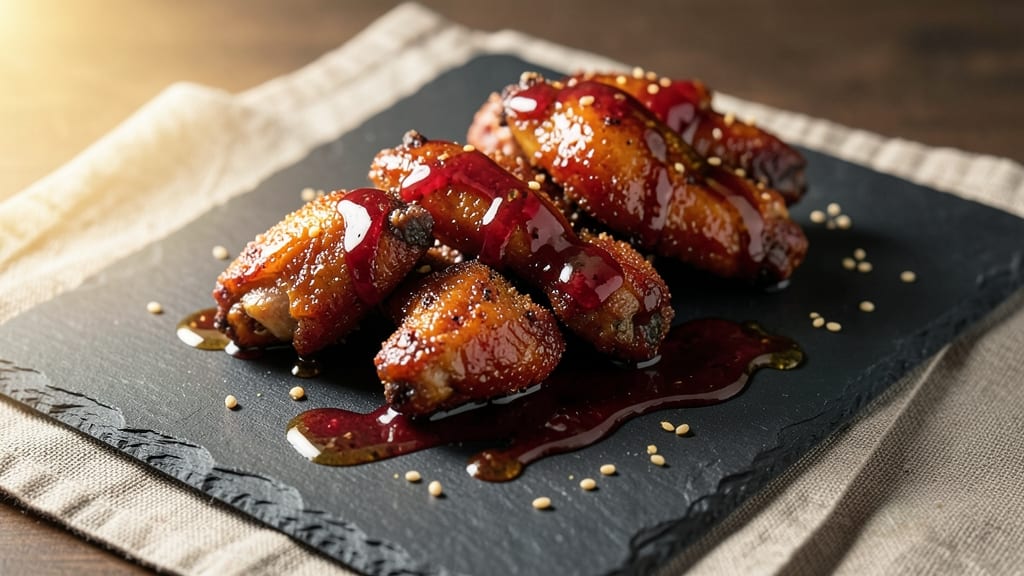
This baked Korean BBQ chicken wings recipe delivers restaurant-quality crispiness without deep-frying, thanks to a sticky-sweet gochujang glaze that caramelizes into a glossy finish. The key? A high-heat bake that transforms tender chicken into perfectly crispy wings with just the right balance of spicy, sweet, and umami flavors.
I’ve perfected this method over years of testing—no greasy mess, just bold, flavorful wings that disappear faster than takeout.
The sauce combines gochujang (Korean chili paste), honey, and soy sauce for that signature Korean BBQ taste, while a cornstarch slurry ensures the wings stay crispy even after baking.
You’ll need just 30 minutes of active prep and 45 minutes in the oven, making it ideal for game day or weeknight dinners. The wings develop a deep mahogany color and a crackling exterior that contrasts beautifully with their juicy interior.
What makes this recipe stand out is the one-bake technique—no double-frying or complicated steps. The gochujang gives it that signature tangy heat, while the honey and sesame oil add depth and shine.
Serve with steamed rice, kimchi, or a cool sesame slaw to balance the richness. Every bite is a perfect harmony of crispy, sticky, and savory.
Leftovers reheat beautifully in the oven or air fryer, keeping that coveted crunch. Whether you’re feeding a crowd or craving a spicy snack, this recipe delivers restaurant-quality wings with minimal effort. Let’s get baking!
Ingredients for baked korean bbq chicken wings
Restaurant-quality crispiness starts with these 14 carefully balanced ingredients for perfect Korean BBQ wings.
| Ingredient | Amount | Notes |
|---|---|---|
| Chicken Wings 🍗 | 2 ½ lb | Split into drumettes and flats, patted dry |
| Gochujang (Korean Chili Paste) 🌶️ | ½ cup | High-quality, smooth texture preferred |
| Honey 🍯 | ¼ cup | Pure, light amber preferred |
| Soy Sauce 🍶 | ¼ cup | Korean or Japanese preferred |
| Sesame Oil 🫒 | 1 tbsp | Toasted sesame oil for aroma |
| Cornstarch 🌾 | 2 tbsp | For crispy coating |
| Garlic Cloves 🧄 | 4 cloves | Minced finely for sauce |
| Asian Pearl Onions 🧅 | 2 whole | Thinly sliced for garnish |
| Sesame Seeds 🌰 | 1 tbsp | Toasted for crunch |
| Olive Oil 🫒 | 1 tbsp | For tossing wings |
| Salt 🧂 | 1 tsp | Kosher or sea salt |
| Black Pepper 🌶️ | ½ tsp | Freshly ground |
| Rice Vinegar 🍶 | 1 tbsp | For balancing sweetness |
| Water 💧 | 1 tbsp | For cornstarch slurry |
The gochujang is non-negotiable for authentic flavor—Hanjin or Maesil brands deliver the smoothest texture. If you can't find Korean gochujang, gochugaru (Korean chili flakes) mixed with a splash of soy sauce works in a pinch, though the texture won't be identical. For the chicken, split drumettes and flats ensure even cooking; larger wings take longer to crisp. Costco or Asian grocery stores stock high-quality gochujang in tubes or jars, while Walmart often carries the Hanjin brand. Look for vibrant red color and smooth consistency—if it's grainy or dull, it's past its prime.
No sesame oil? Toasted peanut oil adds a similar nutty depth, though sesame's aroma is irreplaceable. The cornstarch slurry is critical for that signature crisp—Diamond Crystal cornstarch works best, but Bob's Red Mill is a fine substitute. Asian pearl onions can be swapped for regular yellow onions, but they caramelize more beautifully. For extra heat, add 1 tsp of gochugaru to the sauce, but reduce honey slightly to balance. The rice vinegar cuts through the sweetness; if you're avoiding it, lemon juice at half the amount works too.
Prep the wings 12 hours ahead—pat them dry thoroughly to maximize crispiness. Store sauce ingredients separately until ready to combine. Reheat wings at 375°F for 8-10 minutes to restore crispiness. The sauce keeps for 1 week refrigerated or 3 months frozen; freeze in ice cube trays for single-use portions. Garnish with extra sesame seeds right before serving—no need to refrigerate the finished wings longer than 2 hours, as they'll soften.
Why You'll Love This Recipe
- I’ll be real: most baked wings dry out if you reheat them wrong. Not these. The glaze keeps them tender, so I meal prep a full tray and snack on them all week—no sad, rubbery wings here. Plus, they’re cheap enough to make twice in one week without crying over the grocery bill.
- Five-Ingredient Magic: Honestly, this recipe uses five things you probably already have. Toss wings in a bowl with gochujang, honey, soy sauce, and sesame oil—no fancy prep, no stress. The gochujang does all the work while you’re scrolling through your phone.
- Sweet-Spicy Bliss: That sticky, caramelized glaze? It’s the honey and gochujang playing nice together. The wings get crispy edges but stay juicy inside, with just enough heat to wake up your taste buds—no burning-your-mouth disaster here.
- Game for Any Gathering: Between us, these wings are my go-to for game days, lazy Sundays, or even a last-minute dinner party. Double the batch, throw them in the fridge, and reheat when needed. They’re the crowd-pleaser that doesn’t require a Pinterest-perfect presentation.
Step-by-step instructions for baked Korean BBQ chicken wings
Master this technique for wings with perfect crispy edges and a glossy, balanced sauce.
Prepare the Wings for Maximum Crispiness
Preheat your oven to 425°F with the rack positioned in the middle position. Pat the 2.5 lb chicken wings completely dry using paper towels—this is critical for achieving that crispy texture. Split each wing into drumettes and flats, removing any excess fat or skin that might prevent even cooking.
In a large bowl, toss the dried wings with 1 tablespoon olive oil, 1 teaspoon salt, and 0.5 teaspoon black pepper. Make sure every piece is evenly coated. Let them sit at room temperature for 15 minutes before baking—this ensures they cook through evenly without steaming.
Create the Glossy Korean BBQ Sauce
While the oven preheats, combine 0.5 cup gochujang, 0.25 cup honey, 0.25 cup soy sauce, 1 tablespoon sesame oil, 1 tablespoon rice vinegar, and 4 cloves minced garlic in a mixing bowl. Whisk vigorously until fully incorporated—this blend should be smooth with no visible lumps.
In a separate small bowl, whisk together 2 tablespoons cornstarch and 1 tablespoon water to create a slurry. Slowly pour this into the sauce mixture while whisking continuously. The sauce should thicken slightly but remain pourable. This cornstarch slurry is what creates that signature glossy finish when baked.
Coat and Bake for Perfect Texture
Transfer the wings to a large baking sheet lined with parchment paper, ensuring they're in a single layer with no overlapping. Pour the sauce evenly over the wings, tossing gently to coat them completely. The sauce should cling to every surface—don't be shy about getting your hands involved to ensure even distribution.
Bake for 30 minutes, then flip each wing and bake for another 15-20 minutes until the edges are deep golden brown and the sauce has thickened into a glossy coating. The internal temperature should reach 165°F when checked with a meat thermometer. If the sauce starts to darken too quickly, tent the pan with foil to prevent burning.
Garnish and Serve Immediately
Remove the wings from the oven and transfer them to a serving platter. Immediately sprinkle with 1 tablespoon toasted sesame seeds and thinly sliced Asian pearl onions for color and texture contrast. The sesame seeds add a nutty crunch, while the onions provide a fresh, slightly sweet element that balances the rich sauce.
Serve while the wings are still piping hot, with the sauce clinging beautifully to each crispy piece. The combination of sweet, spicy, and umami flavors should be perfectly balanced, with the honey providing just enough sweetness to complement the gochujang's heat. The cornstarch slurry ensures that glossy finish that makes these wings truly restaurant-quality.
Pro Tips For Making Baked Korean Bbq Chicken Wings
- Pat the Wings Dry: I learned this the hard way—wet wings steam instead of crisp. After tossing them in paper towels (yes, even if they look dry), the gochujang will cling properly and the skin will actually get crispy. No one wants sticky, soggy wings when they’re supposed to be golden and crunchy.
- Mix Gochujang First: Don’t just dump gochujang on raw wings—whisk it with honey, soy sauce, and sesame oil before coating. I used to slap it on after mixing, and the paste would clump in uneven globs. A quick 30-second blend ensures every wing gets that perfect sticky-spicy balance.
- Bake at 400°F, Then Broil: Start wings at 400°F for 25 minutes to render fat and cook through, but finish under the broiler for 3-5 minutes. The high heat at the end caramelizes the honey-gochujang mix into a glossy crust—something that never happens if you just bake straight through.
- Skip the Overcrowding: If your tray looks like a sardine can, the wings will steam instead of crisp. Leave space between them—even if it means two batches. I’ve ruined more batches than I’d like to admit by ignoring this, and the difference in texture is night and day.
Best sauces and condiments for this recipe
Classic Gochujang Base
The signature sauce here starts with ½ cup gochujang—this Korean chili paste is the heart of the flavor. I recommend Hanjin brand for its smooth texture and balanced heat. Mix it with ¼ cup honey for sweetness and ¼ cup soy sauce for umami depth.
The 1 tbsp sesame oil adds nutty aroma that ties everything together. For extra richness, toast 1 tsp sesame seeds in a dry pan until golden, then grind them into the sauce. 🌶️
Cornstarch Glossy Finish
This is the secret to that restaurant-quality shine! Whisk 2 tbsp cornstarch with 1 tbsp water to create a slurry, then stir it into the sauce. The cornstarch helps the glaze caramelize beautifully during baking, creating that glossy coating.
For best results, use Diamond Crystal cornstarch—it's finer and creates a smoother finish. If you're short on time, a 1 tbsp arrowroot powder works too, though the texture might be slightly thinner. 💫
Balancing Flavors
The sauce needs balance, so I add 1 tbsp rice vinegar to cut through the sweetness and 4 minced garlic cloves for depth. For heat adjustment, add ½ tsp gochugaru if you want more spice, or reduce the gochujang slightly.
The 1 tbsp sesame oil also adds a subtle aroma that enhances the overall profile. Taste as you go—this sauce should be sticky but not too thick before baking. ✨
Extra Sauce Options
Want to experiment? Try adding 1 tbsp grated ginger for freshness or 1 tsp fish sauce for extra umami. For a smoky twist, mix in ½ tsp smoked paprika with the cornstarch slurry.
If you prefer less heat, swap 2 tbsp of the gochujang for sweet chili sauce—it keeps the sweet-spicy balance but with milder kick. The sauce keeps well in the fridge for 1 week, so make extra for dipping or drizzling. 🔥
Garnish Like a Pro
Fresh garnishes elevate the dish instantly. Toast 1 tbsp sesame seeds in a dry pan until fragrant, then sprinkle over the wings. Thinly slice 2 Asian pearl onions and scatter them on top for crunch and color.
A final drizzle of extra sesame oil or a sprinkle of flaky sea salt adds another layer of flavor. These garnishes not only look stunning but also provide texture contrast to the crispy wings. 🌟
Dipping Sauces
Serve with a side of spicy mayo (mix ¼ cup mayo with 1 tbsp gochujang and 1 tsp sriracha) for extra heat. For something cooler, blend ¼ cup Greek yogurt with 1 tbsp honey, 1 tsp lime juice, and ½ tsp garlic powder.
Both dipping sauces complement the wings beautifully and let guests customize their heat level. The yogurt sauce also helps cool the palate between bites. 💛
Nutrition facts
Frequently asked questions
Can I make these wings spicier or milder?
For extra heat, add ½ teaspoon gochugaru (Korean chili flakes) to the sauce or swap 1 tablespoon of the gochujang for extra chili paste. For milder wings, reduce the gochujang to ¼ cup and add 1 tablespoon honey to balance. Adjust in ½ teaspoon increments until you reach your preferred spice level.
Why are my wings soggy instead of crispy?
Soggy wings usually happen from steam or uneven drying. Pat the wings extra dry before baking and avoid overcrowding the pan. Bake at 425°F for the full 45 minutes, then finish under the broiler for 2-3 minutes to restore crispiness. A wire rack over a baking sheet helps air circulate better.
Can I use frozen chicken wings?
Yes, but thaw them completely first. Place frozen wings in a sealed bag and refrigerate overnight. Pat them very dry before seasoning—ice crystals can prevent crispiness. For faster thawing, use cold water in a bowl, changing the water every 30 minutes until fully thawed. Never microwave frozen wings for this recipe.
What's the best way to reheat leftovers?
Reheat wings in a 400°F oven for 8-10 minutes on a wire rack to restore crispiness. For air fryer reheating, cook at 375°F for 5-6 minutes, shaking halfway. Avoid microwaving—it makes wings rubbery. Store leftovers in an airtight container for up to 3 days.
Can I make this recipe gluten-free?
Yes! Use gluten-free tamari instead of soy sauce and ensure your gochujang is certified gluten-free. Double-check all seasonings (like garlic powder) for hidden gluten. The cornstarch can be swapped for arrowroot powder, though texture may differ slightly. Test for doneness with a meat thermometer (165°F).