Main Courses
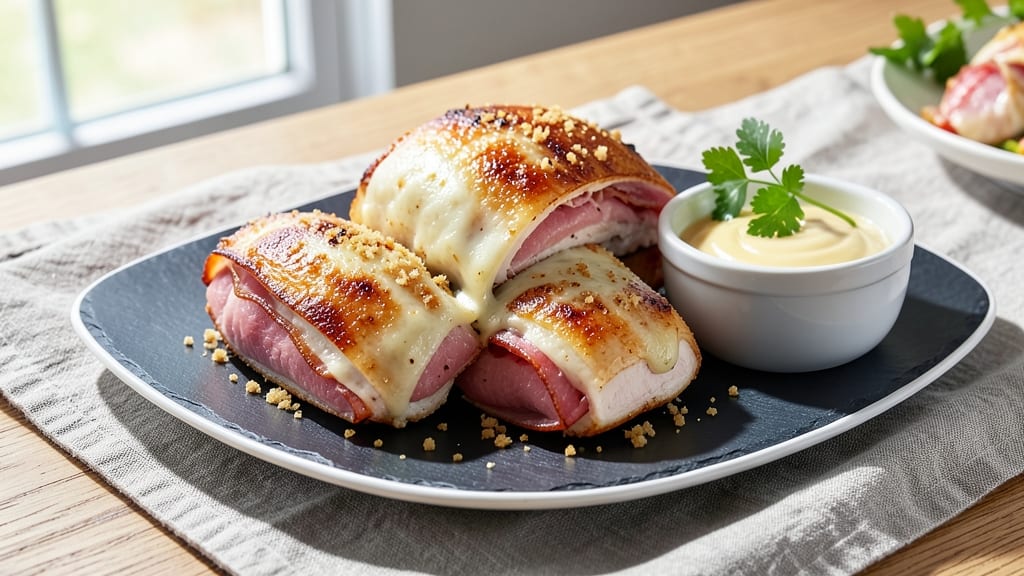
This baked stuffed chicken cordon bleu recipe delivers restaurant-quality elegance with every bite—juicy chicken wrapped in ham and Gruyère, all encased in a crisp golden crust. The secret lies in precise layering and a foolproof baking technique that ensures tender meat and perfect browning.
I've refined this classic dish over years, balancing traditional Swiss-style stuffing with modern shortcuts for home cooks.
The magic begins with butterflying the chicken breasts to create even layers of ham, Gruyère, and seasoned breadcrumbs. A light egg wash before baking creates that signature crispy exterior while keeping the interior succulent.
What sets this apart is the 30-minute baking time at 375°F, which guarantees perfectly cooked chicken without drying out.
By the time it emerges from the oven, you'll have a showstopping centerpiece with golden-brown crust, melted cheese peeking through the crevices, and tender chicken that practically falls apart.
The ham adds savory depth while the Gruyère contributes nutty richness, creating a harmonious blend of textures and flavors in every bite.
Serve with classic sides like creamy mashed potatoes, a crisp green salad, or roasted vegetables to complete the meal. This recipe transforms a simple weeknight dinner into an impressive plated dish that feels like fine dining. Let's get started on creating your perfect cordon bleu.
Ingredients for baked stuffed chicken cordon bleu
Precise ingredients create restaurant-quality stuffed chicken cordon bleu with perfect texture and flavor balance.
| Ingredient | Amount | Notes |
|---|---|---|
| Boneless, Skinless Chicken Breasts 🍗 | 2 whole | Even thickness, pounded to 0.5-inch |
| Thinly Sliced Black Forest Ham 🥓 | 8 oz | Low-sodium preferred, cut into strips |
| Gruyère Cheese 🧀 | 4 oz | Freshly grated, aged 12 months minimum |
| All-Purpose Flour 🌾 | ½ cup | For dredging, sifted |
| Large Eggs 🥚 | 2 whole | Room temperature, beaten |
| Panko Breadcrumbs 🍞 | ½ cup | Japanese-style for extra crispiness |
| Unsalted Butter 🧈 | 2 tbsp | Melted, for brushing |
| Fresh Parsley 🌿 | ¼ cup | Finely chopped, for garnish |
| Garlic Cloves 🧄 | 2 cloves | Minced, for seasoning |
| Diamond Crystal Kosher Salt 🧂 | ½ tsp | For seasoning, not iodized |
| Freshly Ground Black Pepper 🌶️ | ¼ tsp | Coarsely ground |
| Dried Thyme 🌿 | ½ tsp | French variety preferred |
| Olive Oil 🫒 | 1 tbsp | Extra-virgin, for brushing |
The chicken breasts are the foundation—look for evenly sized pieces from the deli counter at Whole Foods or your local butcher, as uniform thickness ensures even cooking. Gruyère is non-negotiable; imported Swiss varieties from specialty stores like Gourmet Getaway deliver superior melt and nutty depth. For the ham, Black Forest or Virginia ham slices work best, but any high-quality deli ham will suffice. Panko breadcrumbs create that signature crispy crust—avoid fine breadcrumbs, as they won't provide enough texture. Pre-grate your own cheese whenever possible; pre-shredded varieties contain anti-caking agents that prevent proper melting.
No panko? Regular breadcrumbs toasted in a dry pan for 3 minutes work in a pinch, though the texture won't be identical. Substituting Gruyère for Emmental or Comté maintains a similar profile, though the flavor will differ slightly. If you're avoiding gluten, almond flour or crushed cornflakes can replace the breadcrumbs, though the crust will be less crisp. For the egg wash, add 1 tbsp water to the beaten eggs for a glossier finish. The garlic can be omitted if you prefer milder flavor, but the thyme is essential—French or English thyme from bulk bins at Penzeys provides the best aromatic punch. Always use unsalted butter for brushing to control seasoning precisely.
Chicken breasts should be used within 2 days of purchase for optimal texture. Store them in the coldest part of your fridge, wrapped in paper towels to absorb excess moisture. The ham and cheese can be prepped 1 day ahead and refrigerated in an airtight container. For make-ahead convenience, assemble the stuffed breasts up to 4 hours before baking, then refrigerate uncovered on a wire rack to prevent sogginess. Leftovers reheat beautifully in a 350°F oven for 10-12 minutes, covered with foil to retain moisture. This dish freezes poorly due to the breadcrumb crust, so plan to enjoy it fresh or within 2 days of baking.
Why You'll Love This Recipe
- No Fuss Assembly: I swear by this—just butter the chicken, stuff it with ham and cheese, then roll it up like a burrito. No fancy knife work, no last-minute prep. Honestly, the hardest part is resisting the urge to eat it raw.
- Melty Magic Inside: That Gruyère stretches and melts into a creamy, gooey blanket around the ham, while the crust stays golden and crisp. It’s the kind of bite that makes you close your eyes—like a fancy restaurant, but with a grocery-store cheese.
- Weeknight to Dinner Party: Same recipe, different vibes. Toss it in the oven for a Tuesday night meal, or plate it with a side salad and roasted veggies for guests. The best part? It stays intact even when you’re serving seconds.
- Leftovers That Don’t Suck: Unlike fried Cordon Bleu, this bakes up sturdy enough to reheat without falling apart. I’ve turned yesterday’s dinner into tomorrow’s lunch—sliced, pan-seared, and served with a drizzle of honey mustard. Zero waste, all win.
Step-by-step instructions for baked stuffed chicken cordon bleu
Master this classic French technique with precision—juicy chicken, perfectly balanced ham, and melted Gruyère in every bite.
👨🍳 Step 1: Prepare the Chicken and Stuffing
Begin by butterflying each of the 2 whole boneless, skinless chicken breasts by making a horizontal cut down the center to create two even-thickness cutlets. Pound them gently to a ½-inch thickness using a meat mallet or rolling pin. This ensures even cooking and a consistent texture.
Season both sides of the chicken with ½ teaspoon diamond crystal kosher salt, ¼ teaspoon freshly ground black pepper, and ½ teaspoon dried thyme. For the stuffing, layer 4 ounces freshly grated Gruyère cheese and 8 ounces thinly sliced Black Forest ham evenly over one half of each butterfly-cut breast. Fold the other half over the filling to completely enclose it, creating a neat, rectangular package. Secure each package with toothpicks to hold the stuffing in place.
🍳 Step 2: Bread and Chill the Stuffed Chicken
Set up a breading station with three shallow bowls. In the first, place the ½ cup all-purpose flour and mix in the 2 minced garlic cloves. In the second bowl, beat the 2 whole large eggs with a fork until just combined. In the third bowl, place the ½ cup Japanese-style panko breadcrumbs.
Dredge each stuffed chicken package first in the flour mixture, pressing gently to adhere. Dip into the beaten eggs, allowing excess to drip off, and then coat thoroughly in the panko breadcrumbs. Place the breaded chicken on a wire rack set over a baking sheet and refrigerate for 30 minutes. This chilling step ensures the breading stays intact during baking and creates a crispy exterior.
🔥 Step 3: Bake to Golden Perfection
Preheat your oven to 375°F. Remove the chilled chicken from the refrigerator and brush the tops generously with 2 tablespoons melted unsalted butter. Place the chicken on a parchment-lined baking sheet, spacing them 1 inch apart to allow for even browning. Bake for 25-30 minutes, until the chicken reaches an internal temperature of 165°F and the breading is deep golden brown.
For extra flavor, brush the chicken again with 1 tablespoon olive oil halfway through baking. This step guarantees a crispy, caramelized crust while keeping the chicken juicy inside. If the breading browns too quickly, tent the baking sheet loosely with aluminum foil to prevent over-browning while the chicken finishes cooking.
🥘 Step 4: Rest and Garnish
Once the chicken is fully cooked, remove it from the oven and transfer to a cutting board. Let it rest for 5 minutes before removing the toothpicks. This resting period allows the juices to redistribute, ensuring each bite is moist and flavorful. Garnish each piece with ¼ cup finely chopped fresh parsley and serve immediately.
The result should be a beautifully browned, crispy exterior with a perfectly melted Gruyère cheese center and tender, juicy chicken. The ham adds a subtle sweetness that complements the rich Gruyère and savory chicken. Serve with a side of roasted vegetables or a simple green salad for a complete meal.
Pro Tips For Making Baked Stuffed Chicken Cordon Bleu
- Pound Chicken Evenly: I learned this the hard way—uneven pounding means uneven cooking. Use a meat mallet (or rolling pin in a pinch) to tap the breasts to ¼-inch thickness before stuffing, or the ham and cheese will bake unevenly and dry out the center.
- Prep Ham in Strips: Skip the pre-sliced ham from the deli—it’s often too thick and soggy. Instead, slice Black Forest ham into ¼-inch-wide strips yourself, or freeze it for 15 minutes first to make cutting easier. Thin layers = even cooking and no chewy surprises.
- Bake at 375°F, Not Higher: I used to blast these at 400°F for "crispy crust," but the cheese would melt into a greasy mess before the chicken cooked through. 375°F is the sweet spot—golden crust without a rubbery center. Use an oven thermometer to confirm.
- Dredge in Flour, Not Egg Wash: Ditch the egg wash—it makes the breading soggy. Instead, lightly coat the stuffed breasts in flour (shake off excess) before dipping in beaten egg. This creates a crispier crust that holds up to the cheese pull. (Yes, even if you’re impatient like me.)
Common mistakes when making great baked stuffed chicken cordon bleu
Uneven Chicken Thickness
Skipping the butterflying step or using uneven chicken breasts leads to inconsistent cooking. Always pound your breasts to ½-inch thickness—I use a meat mallet for precision.
Uneven thickness means some areas cook faster, while others stay underdone. If your chicken has thick spots, trim them carefully with a sharp knife before seasoning. 🔪
Overstuffing the Chicken
Packing too much ham and cheese creates a dense, uneven package that won’t brown properly. Aim for a ¼-inch layer of ham and cheese combined—any thicker, and the breading won’t adhere well.
Overstuffed chicken also risks spilling filling during baking, creating a messy presentation. Fold the chicken tightly to contain the filling securely.
Skipping the Chill Step
Omitting the 30-minute refrigeration after breading causes the crust to slide off during baking. The cold helps the breadcrumbs set and the egg wash firm up.
If you’re short on time, place the breaded chicken in the freezer for 15 minutes instead—this works in a pinch but may make the crust slightly less crisp.
Baking at the Wrong Temperature
Baking below 375°F results in soggy breading, while exceeding 400°F burns the exterior before the chicken cooks through. Use an oven thermometer to confirm accuracy—many home ovens run 25°F hotter or cooler than set.
For extra insurance, bake at 375°F for 25 minutes, then broil for 2-3 minutes to crisp the crust.
Not Brushing with Butter
Forgetting the butter brush before baking leaves the breading dry and pale. The butter creates a golden, glossy finish while adding rich flavor. I melt 2 tablespoons unsalted butter and brush it on just before baking—this step is non-negotiable for that restaurant-quality look. 🧈
Cutting Too Soon
Slicing into the chicken immediately after baking causes juices to spill out, leaving you with dry meat. Always let it rest for 5 minutes to allow the juices to redistribute. If you’re impatient, tent the chicken loosely with foil while it rests to keep it warm.
This simple step makes the difference between tender, juicy chicken and a dry, disappointing result.
Nutrition facts
Frequently asked questions
Can I use chicken thighs instead of breasts for this recipe?
Chicken thighs will work but require adjustments. Use bone-in, skin-on thighs for better moisture retention, and reduce baking time to 20-25 minutes at 375°F since they cook faster. The skin will crisp beautifully, but thighs have more fat, so trim excess for a leaner result.
What's the best way to substitute Gruyère cheese?
For a similar melt and nutty flavor, use Emmental or Comté cheese. If you prefer a sharper taste, Jarlsberg works well. Avoid pre-shredded cheeses—they contain anti-caking agents that prevent proper melting. For a dairy-free option, try nutritional yeast or vegan cheese blends, though texture will differ.
How do I make this recipe gluten-free?
Replace the flour with ½ cup gluten-free all-purpose flour and use ½ cup crushed cornflakes or almond flour instead of panko. For the egg wash, use a gluten-free flour slurry (1 tbsp flour + 1 tbsp water) mixed with the beaten egg. The crust won't be as crispy, but it will still hold together.
Can I prepare the stuffed chicken ahead of time?
Yes! Assemble the stuffed chicken up to 4 hours ahead and refrigerate uncovered on a wire rack. This prevents sogginess. For the breading, set up your station the night before and refrigerate the breaded chicken on a rack. Bake as directed, adding 2-3 extra minutes to the cooking time.
Why is my breading falling off during baking?
This usually happens when you skip the 30-minute chill step or don't press the breadcrumbs firmly. Ensure each piece is fully coated and refrigerated before baking. If the breading still falls off, try using more egg wash (add 1 tbsp water) or lightly brush the chicken with olive oil** before breading for better adhesion.